-
Markov and the Mean Reversion Framework
-
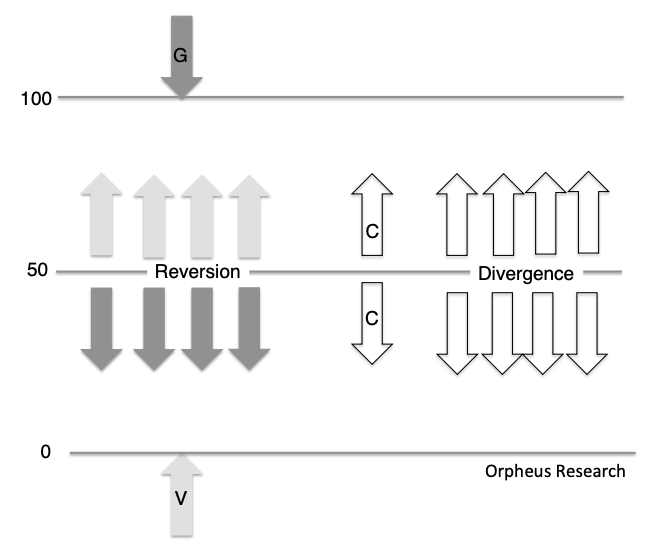
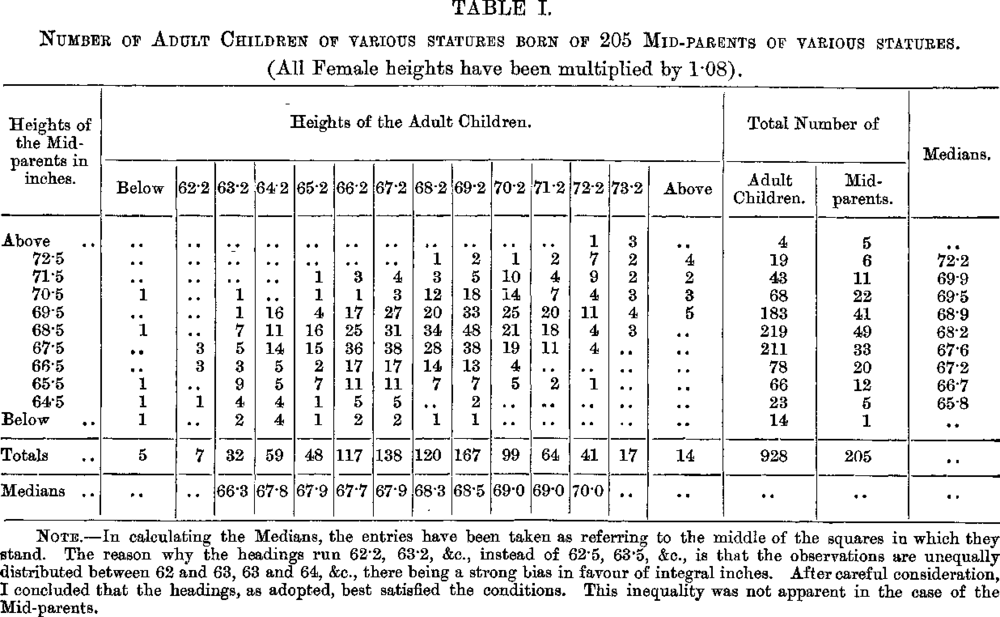
Mean Reversion Framework
-
Winner’s Curse
Searching for alpha is searching through inefficiency because there are no supernormal returns in efficiency. This seems intuitive and correct because there is a cost to searching through inefficiency. And agents who spend that cost have to be rewarded for that effort. The case for inefficiency is unassailable.
-
End of behavioral finance
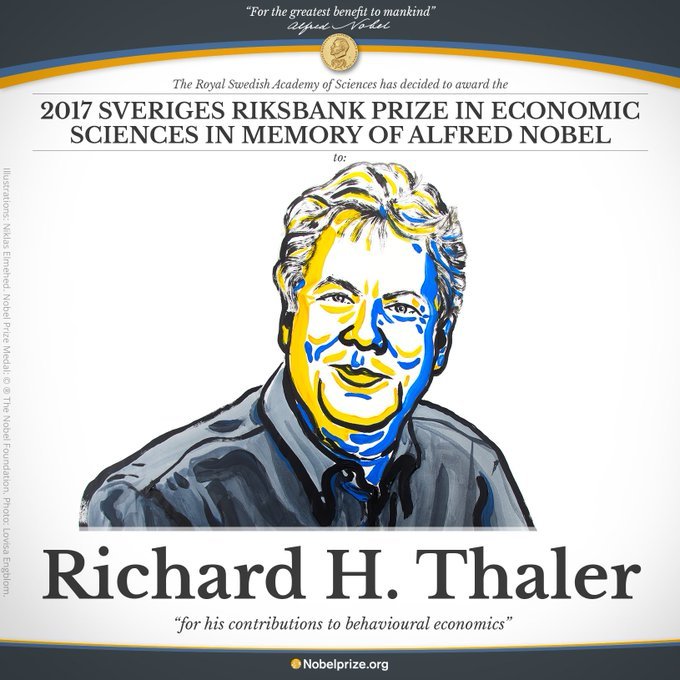
I really don’t know why Richard Thaler chose this headline for a research paper. Many other behavioral finance academic papers also capture attention. “Can the markets add and subtract?”; “The winner’s curse”; “The gambler’s fallacy”, “Does the stock market overreact?” While the popularity of the subject has increased and behavioral biases have got so pervasive…
-
Style box, broken or fixed.

-
Nobel’s Interdisciplinary Connections

Somehow my Interdisciplinary mind registered Eugene faster than Fama. After all Eugene Stanley, the father of Econophysics could also get a Nobel. If Psychologists could get the biggest award for Economics, a physicist could have been there too. But then the surprise became bigger, not because it was Fama, not Stanley but because Robert Shiller…
-
The Fortune Index

Data models should work across regions, across nature, across data sets. This means “Data Universality”. If natural phenomenon exhibit universal patterns like geometry, outliers, 80-20 principle, mean reversion, fat tails etc. then the data these natural phenomena generate should also express a similar behavior; actually they do. But we still consider data sets as religious,…
-
Stock Market Science

Why is the stock market not a science? Today many elements of our life have a degree of predictability, consumption patterns, social behavior, earthquakes, etc. However, the predictive measure is lacking when it comes to stock markets. Behavioral finance highlighted this lacking measure and accountability. Even statisticians limit themselves to the prediction of stock market…
-
The Drunkard’s Walk

In 1827, Robert Brown saw a random movement of pollen particles in water. This was called Brownian motion, also the drunkard’s walk. In 1902, Einstein proved this and confirmed the presence of atoms and molecules. This was 100 years after the atomic theory was proposed by John Dalton and was the first attempt to reconcile…
-
Jazz and Trading

Christmas is about making wishes. However, some wishes are not reasonable. For example, wishing for a universal database is wishful thinking, as such a database would need a lot of server space. I am not speaking of a smart stock market database but a database for every organic data from the stock markets to the…