Category: Research

  • 2000 – Ising, Non-Normality and Power Law Criticisms

    2000 – Ising, Non-Normality and Power Law Criticisms

    Despite its popularity, the power law has not been without its failures and has rather come under criticism. In the paper ‘Scale-dependent price fluctuations for the Indian stock market’, Matia K, Pal M, Salunkay H, Stanley HE (2004), the authors explained how Indian stock market may belong to a universality of class different than that…

  • Adaptive Market Hypothesis

    Adaptive Market Hypothesis

    Adaptive Market Hypothesis (AMH) embraces Efficient Market Hypothesis (EMH) as an idealization that is economically unrealizable, but which serves as a useful benchmark for measuring relative efficiency.

  • Law of Ruin

    Law of Ruin

    Jules Augustin Frédéric Regnault was a French stock broker’s assistant who first suggested a modern theory of stock price changes in Calcul des Chances et Philosophie de la Bourse (1863) and used a random walk model. He is also one of the first authors who tried to create a “stock exchange science” based on a…

  • The Duration Factor

    The Duration Factor

    John Rae’s inter-temporal choices explained the statistical nature of human behavior in 1834. However, despite the subject’s insight in the objectiveness of behavior, inter-temporal choices remains a peripheral science. This paper takes a sequential approach to question how inter-temporal choices could be behind human behavior, behavioral anomalies and even market anomalies. If these inter-temporal anomalies…

  • Is Reversion Statistical?

    Is Reversion Statistical?

    There is no disagreement regarding the statistics of mean reversion. What goes up comes down and vice versa. Campbell and Shiller (1988) said that the simple theory of mean reversion was basically right.

  • Information Relevance

    Information Relevance

    It was in 1968 that Ball and Brown considered the content of accounting information, the flow of information, the relevance of information, its predictive powers and its continuity and time dependence. The observed reversion was used as a validation of predictive content in earnings. This relevance was later shown to cause a drift, an anomaly,…

  • What is Stationarity?

    What is Stationarity?

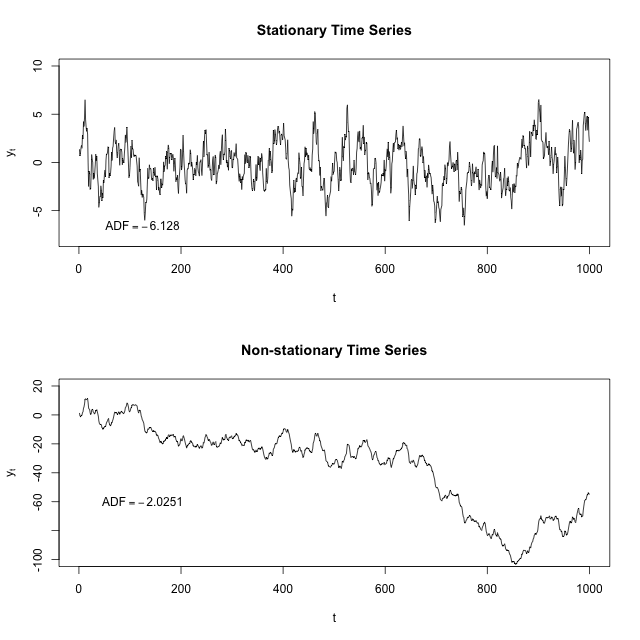
    Mean reversion has been the cornerstone in differentiating the random from the non-random behavior. Stationarity is used to identify mean reversion in a time series.

  • Arbitraging the anomalies

    Arbitraging the anomalies

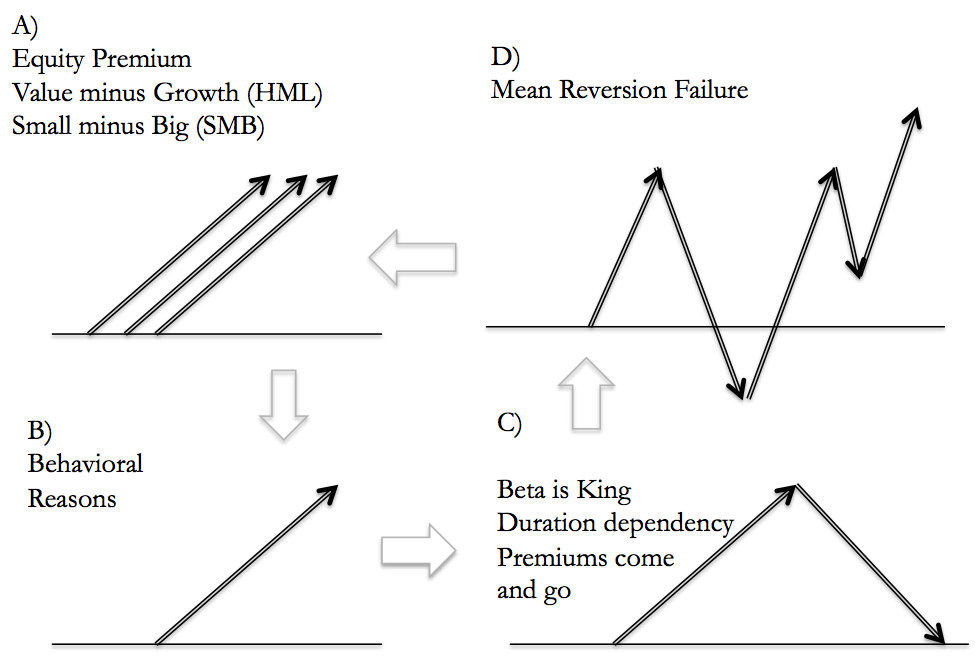
    In finance, arbitrage is an essential framework to understand asset pricing. However, the study of anomalies also called as premiums, which are not arbitrageable has led to a debate regarding whether markets are efficient in correcting price imbalances or is inefficiency a reality.

  • Reversion Diversion Hypothesis

    Reversion Diversion Hypothesis

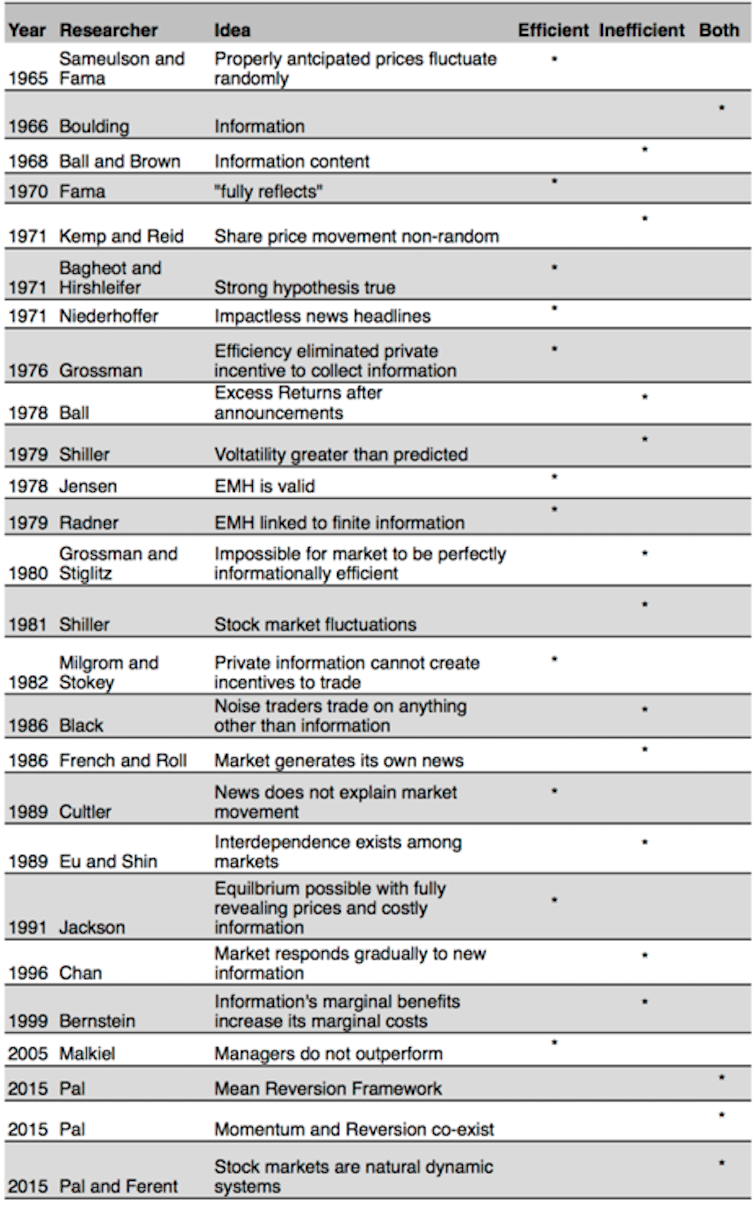
    Information is an assumption for modern finance. The Efficient Market Hypothesis uses information to back its case for efficiency. The EMH case is weak, but as Martin Swell (2011) explains until a flawed hypothesis is replaced by better hypothesis, criticism is of limited value.

  • Momentum and Reversion

    Momentum and Reversion

    Momentum and Reversion have always been seen as independent of each other and never as a composite. This study explains how the two behaviors are not only connected but also get transformed into each other.