-
The doomed outlier

A friend took me out for coffee and gifted me Gladwell’s Outlier at the 2009 bottom. “This is dedicated to your doomed outlier”. During those murky times, the negative outliers were moving to a positive polarity (worst stocks were becoming potential outperformers). Three years later and many outliers later, Gladwell’s lucid narrative on the history…
-
The Rational Exuberance
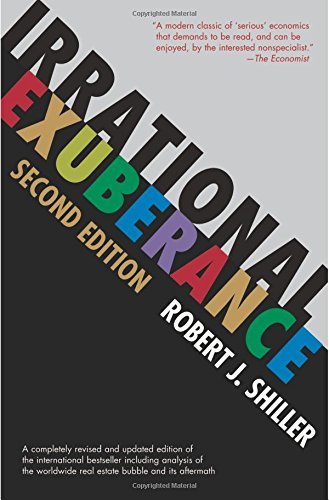
In the age of information, quotes become books and books religion, almost. Robert Shiller’s Irrational Exuberance was a voice of caution that appeared in March 2000, before the start of a decade-long sequence of negative fluctuations. The book itself was written about economic bubbles and investor psychology.
-
The Weeping Willow

I was invited to deliver an inspirational speech at the Start-up Weekend for the global Jade network. KJ, a friend of mine, an international expert on e-gaming and netpreneur could not avoid a smirk: “Mukul and inspirational talk?”. He knew me well and was much updated about the contrarian me and our idea of glorifying…
-
Investing like Odysseus

-
Patterns, Predictions and Possibilities
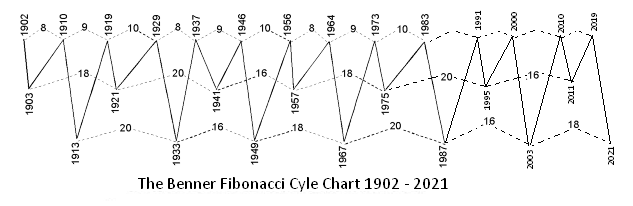
I am reading Critical Mass, Philip Ball. It talks about patterns in nature and the market and how they are scientifically linked. The author does a tremendous job showcasing order in a presupposed random world. In one of the chapters, the author illustrates how financial crashes and statistical mechanics overlap.
-
The Weekend Effect

-
Inflation or Deflation?

-
The Economics Nobel

-
Quantifying Social Mood

Classifying social mood and labeling it with wave counts is still an expertise, especially if you are new to Elliott Waves. Though Socionomics experts defined and developed an essential treatise on social behavior, quantification of Socionomics (the study of human social behavior) — like behavioral finance — isn’t easy.
-
The Earthquake Science

Earthquake science can be used in markets because of time fractals. The earthquake science working for markets is an opinion as old as the butterfly effect and the study on Sun cycles influencing markets. Xavier Gabaix, assistant professor of economics at MIT, did not say that earthquake causes market behavior, but that large-scale events in…